Keynote Speakers

Dr. Goutam Chattopadhyay
California Institute of Technology, Pasadena, California, USA.
Talk Title: Space Exploration and Our Place in the Universe
Date:17 April, 2025
Talk Time: 09:50am – 10:20am
Venue/Room: Jinnah Auditorium
Biography:
Goutam Chattopadhyay is the 2025 President of the IEEE Microwave Theory and Technology (MTT) Society and a Visiting Professor at the California Institute of Technology (Caltech) in Pasadena, USA. Dr. Chattopadhyay earned his Ph.D. in Electrical Engineering from Caltech in 2000. He is a Fellow of IEEE (USA) and, serves as a Track Editor for the IEEE Transactions on Antennas and Propagation, and is an IEEE Distinguished Lecturer. His research focuses on microwave, millimeter-wave, and terahertz receiver systems and radars, as well as the development of space instruments aimed at searching for life beyond Earth.
Dr. Chattopadhyay has published over 400 papers in international journals and conferences and holds more than 20 patents. He has received over 35 NASA Technical Achievement and New Technology Invention Awards. In 2024, he was honored with the Armstrong Medal from the Radio Club of America (RCA) for his outstanding contributions to radio science. He also received the NASA-JPL People Leadership Award in 2023. Dr. Chattopadhyay was named IEEE Region-6 Engineer of the Year in 2018 and received the Distinguished Alumni Award from the Indian Institute of Engineering Science and Technology (IIEST), India, in 2017. Additionally, he has won the Best Journal Paper Award from IEEE Transactions on Terahertz Science and Technology in both 2020 and 2013, as well as the Best Paper Award for Antenna Design and Applications at the European Antennas and Propagation Conference (EuCAP) in 2017.
Abstract:
Space exploration has revolutionized our understanding of the universe and our place within it. Through groundbreaking missions like the Hubble Space Telescope, the Mars rovers, and the Voyager probes, we've gained profound insights into distant planets, stars, and galaxies, while also exploring the very origins of our solar system. These missions, driven by cutting-edge technology, not only expand our knowledge of space but also challenge our understanding of fundamental questions about the origins of life, the potential for life elsewhere, and the evolution of the cosmos itself. Advancements in space technology have made it possible to reach farther than ever before, pushing the boundaries of human exploration. From reusable rockets to advanced telescopes that peer deeper into the universe, innovations in technology continue to play a vital role in our quest for knowledge. As we develop smarter, more efficient systems, we are not only uncovering the mysteries of space but also rethinking our role in the vast, interconnected universe, sparking new questions about humanity’s future and our responsibility to protect the Earth. This talk will explore the technologies currently being developed for space-based instruments and provide insight into what the future holds for space exploration.

Professor Stefano Maci
Department of Information Engineering and Mathematics, Via Roma, Siena, Italy
Talk Title: Metasurface Antennas: new solutions for 6G and SatCom
Date:17 April, 2025
Talk Time: 10:25am – 10:55am
Venue/Room: Jinnah Auditorium
Biography:
Stefano Maci is a Professor at the University of Siena (UNISI). Since 2000, he has been P.I. of 10 research projects funded by the European Union (EU) and by the European Space Agency (ESA). He is a Fellow of IEEE since 2004. In 2004 he founded the European School of Antennas (ESoA), a PhD school that presently comprises 35 courses on Antennas, Propagation, and Electromagnetic Theory, and 200 teachers, among them 20 IEEE Fellow. He graduated more than 40 PhD students. He has been former member of IEEE Antennas and Propagation Society (AP-S) AdCom, the Chair of the Award Committee of the IEEE AP-S, member of the AP Executive Board of IET (UK), Distinguished Lecturer of IEEE and of EurAAP. He was recipient of several prizes and awards, among which the EurAAP Award 2014, the Chen-To Tai Distinguished Educator award 2016, of the Shelkunoff Transaction Prize in 2015, and of the URSI Dellinger Gold Medal in 2020. He is presently Director of ESoA. He has been TPC Chair of the METAMATERIAL 2020 and and General Chair of EuCAP 2023. He was the president of the IEEE Antennas and Propagation Society 2023. In the last ten years he has been invited 60 times as key-note speaker in international conferences. His research activity is documented in 200 papers published in international journals, (among which 100 on IEEE journals), 10 book chapters, and about 450 papers in proceedings of international conferences. .
Abstract:
Metasurfaces belong to the category of thin metamaterials and find applications across a wide frequency range, from microwaves to optical frequencies, for developing innovative electromagnetic engineering devices. These surfaces are created by densely arranging small elements on or etching them into a dielectric substrate in a locally periodic distribution. By adjusting the dimensions of these elements while maintaining sub-wavelength 2D periodicity, a pixelated visual appearance and an electromagnetic modulation of the equivalent local impedance boundary conditions (IBC) are achieved. The manipulation of IBC allows for localized modifications in the dispersion equation, influencing the local wavevector while maintaining a constant operating frequency. This capability enables the transformation of surface or guided waves into various wavefield configurations with specified properties. This presentation will focus on the control of both surface-waves and space-waves, showcasing examples such as the design of high-gain, low cross-polarization antennas, multibeam antennas, and scanning beam flat lenses. Emphasis will be given to space applications. The discussion will also delve into the third generation of adaptive metasurfaces (MTSs), featuring dynamically reconfigurable boundary conditions. This advancement opens possibilities for exploring new perspectives in the development of next-generation wireless communication systems.
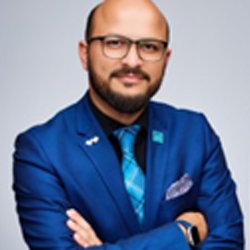
Dr. Qammer H. Abbasi
James Watt School of Engineering, University of Glasgow, UK
Talk Title: Reconfigurable Intelligent Surfaces (RIS) for Communication, Sensing, and Localisation
Date:17 April, 2025
Talk Time: 11:00am – 11:30am
Venue/Room: Jinnah Auditorium
Biography:
Qammer H. Abbasi is Professor of Applied Electromagnetics & Sensing with the James Watt School (JWS) of Engineering, Theme lead for Connecting People priority at JWS, Director for Communication Sensing and Imaging (CSI) Hub, Co-Director for EPSRC CDT DiveIn and UK Government’s Policy Advisor in Department for Science Innovation & Technology. He has grant portfolio of £13M+ and contributed to more than 500+ leading international technical journal (including nature portfolio) and peer reviewed conference papers, 11 books and received several recognitions for his research. Prof. Abbasi is an IEEE senior member and is chair of IEEE APS/MTT UK, Ireland and Scotland joint chapter. He is an Associate editor for IEEE Sensors, IEEE open journal of Antenna and Propagation, IEEE JBHI and scientific reports. He is IEEE APS distinguished lecturer (2024-26), Vice-Chair of IEEE APS Young professional committee, Sub-committee chair for IEEE YP Ambassador program, committee member for IEEE 1906.1.1 standard on nano communication, IEEE APS/SC WG P145, IET Antenna & Propagation and healthcare network. He is/was Fellow of Royal Society of Arts, industrial Fellow of Royal Academy of Engineering (2022-23), Fellow of Institution of Engineering & Technology and Fellow of European Alliance of innovation.
Abstract:
Reconfigurable Intelligent Surfaces (RIS) have emerged as a transformative technology for next-generation wireless networks, enabling precise control of electromagnetic waves to enhance communication, sensing, and localisation. RIS leverages programmable metasurfaces composed of sub-wavelength reflective elements to dynamically manipulate the amplitude, phase, and polarization of incident waves. This capability supports diverse applications in 6G scenarios, including high-speed data transmission, real-time health monitoring, and indoor localisation. In communication, RIS improves energy efficiency and signal coverage, particularly in Non-Line-of-Sight (NLoS) environments. It achieves efficient beamforming with minimal power consumption and low hardware complexity. For sensing applications, RIS enables high-accuracy vital sign detection, including real-time heartbeat and respiration monitoring in NLoS conditions, overcoming limitations of conventional RF sensing technologies. For localisation, RIS enhances the performance of machine-learning-based indoor positioning systems by reshaping radio wave propagation and reducing multipath fading effects. The technology supports both active and passive localisation methods, making it ideal for complex, dynamic environments. RIS holds immense potential in integrated sensing and communication (ISAC) systems, paving the way for innovative solutions in smart homes, healthcare, and urban environments. By addressing challenges such as NLoS coverage, hardware constraints, and energy efficiency, RIS is poised to play a critical role in realising the vision of ubiquitous, intelligent, and sustainable wireless networks
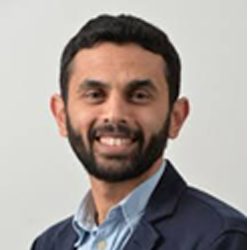
Professor Akram Alomainy
Queen Mary University of London (QMUL), UK
Talk Title: Advances in Wearable Technologies and EM Structures for Next Generation Healthcare and Biomedical Solutions
Date:17 April, 2025
Talk Time: 12:00pm – 12:30pm
Venue/Room: Jinnah Auditorium
Biography:
Akram Alomainy is the Deputy Dean for Postgraduate Research in the Faculty of Science and Engineering, Head of the Antennas and Electromagnetics Research Group, Lead of the Centre for Electronics and a Professor of Antennas & Applied EM in the School of Electronic Engineering and Computer Science at Queen Mary University of London (QMUL), UK. He has authored and co-authored 5 books, 6 book chapters and more than 500 technical papers (12500+ citations) in leading journals and peer-reviewed conferences. Prof Alomainy won the Isambard Brunel Kingdom Award, in 2011, for outstanding young science and engineering communicator and both the education and research excellence awards at QMUL in 2019 and 2021, respectively. He chairs EU and international funding panels including FWO in Belgium and serves as associate editor for various journals including IEEE AWPL, J-ERM and Nature Scientific Reports. He was the UK URSI Panel B representative until 2020 and serves as external examiner for many UK and international universities.
Abstract:
With the advent of commercial products, such as Google Glass, Samsung Galaxy Gear and the expected iWatch, body-centric communication has increasingly garnered the public attention and smoothly translated state-of-the-art research work into reality. With the development of nanotechnology, the idea of connecting nano-devices to conduct complicated tasks and communicate the information collected by these sesnors was a natural progression in order to complete the overall picture of a new generation of body-centric wireless networks. Connecting these nano-machines (or nano-devices) together in order for them to execute a useful function and deliver information between nano-nodes and ultimately interfacing to users or the outside world, the birth of nano-communication and networking was a necessity. Nano-scale communication is referred to the exchange of information at the nanoscale and it is the basis of any wired/wireless interconnection of nano-devices in a nano-network. The way the nano-devices communicate with each other has strong dependence on the way in which they are realised. In addition, the specific application of the nano-network determines the deployment of the nano-networks, thus constraining the choice on the particular type of nano-communication.
The talk will present development of reliable and comprehensive channel modelling, human tissue electric properties in the THz band and networking technologies to address the major challenges of the nano-scale electromagnetic channels needed for body-centric wireless nano-networks deployed in future healthcare applications. With the advancement of nano-scale machine fabrication and the deep understanding of molecular behaviour within the human body, future healthcare monitoring and feedback systems are expected to be comprehensive, efficient and ubiquitous hence coupling existing wireless wearable sensors and implantable units with nano-machines and networks.
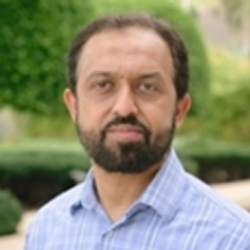
Professor Atif Shamim
King Abdullah University of Science & Technology (KAUST), Saudi Arabia
Talk Title: Flexible, Wearable, Disposable Wireless Communication and Sensing Systems Through Additive Manufacturing
Date:17 April, 2025
Talk Time: 12:35pm – 1:05pm
Venue/Room: Jinnah Auditorium
Biography:
Atif Shamim joined the Electrical and Computer Engineering Program at KAUSTin 2010, where he is currently a Full Professor, Chair of the ECE Program and the Principal Investigator of IMPACT Lab. His research work has won best paper awards in IEEE ICMAC 2021, IEEE IMS 2016, IEEE MECAP 2016, IEEE EuWiT 2008, has won best thesis competition (3MT) in IEEE IMS 2019 and Design competitions in IEEE IMS 2024 and IEEE AP-S 2022, finalist/honorable mention prizes in IEEE AP-S Design Competition 2020, IEEE IMS 2017 (3MT), IEEE IMS 2014, IEEE APS 2005 and R. W. P. King prize for journal papers in IEEE TAP 2017 and 2020. He has been selected as the Distinguished Lecturer for IEEE AP-S (2022-2024). He has won the Kings Prize for the best innovation of the year (2018) for his work on sensors for the oil industry. He is an author/co-author of 1 book, 3 book chapters and 350 international publications, an inventor on 35 patents and has given over 100 invited talks at various international forums. His research interests are in innovative antenna designs and their integration strategies with circuits and sensors for flexible and wearable wireless sensing systems through a combination of CMOS and additive manufacturing technologies. He is a Fellow of IEEE, founded the first IEEE AP/MTT chapter in Saudi Arabia (2013) and served on the editorial board of IEEE Transactions on Antennas and Propagation (2013-2019), and as a Guest Editor for IEEE AWPL Special issue (2019), and an Associate Editor for IEEE Journal of Electromagnetics, RF and Microwaves in Medicine and Biology (2020-2024). He is the Vice Chair for IEEE APS MGA Committee (Jan 2024-current).
Abstract:
With the advent of wearable sensors and internet of things (IoT), there is a new focus on electronics which can be bent so that they can be worn or mounted on non-planar objects. Due to large volume (billions of devices), there is a requirement that the cost is extremely low, to the extent that they become disposable. The flexible and low-cost aspects can be addressed through additive manufacturing technologies such as inkjet and screen printing. This talk introduces additive manufacturing as an emerging technique to realize low cost, flexible and wearable wireless communication and sensing systems. The ability to print electronics on unconventional mediums such as plastics, papers, and textiles has opened up a plethora of new applications. In this talk, various innovative antenna and sensor designs will be shown which have been realized through additive manufacturing. A multilayer process will be presented where dielectrics are also printed in addition to the metallic parts, thus demonstrating fully printed components. Many new functional inks and their use in tunable and reconfigurable components will be shown. In the end, many system level examples of wireless sensing applications will be shown. The promising results of these designs indicate that the day when electronics can be printed like newspapers and magazines through roll-to-roll printing is not far away.

Dr. Imran Mehdi
California Institute of Technology, Pasadena, California, USA.
Talk Title: Unlocking Mysteries of the Universe: Role of THz Technology
Date:18 April, 2025
Talk Time: 10:45am – 11:15am
Venue/Room: Jinnah Auditorium
Biography:
Dr. Imran Mehdi (Fellow, IEEE) is a distinguished Senior Research Scientist at the Jet Propulsion Laboratory (JPL), California Institute of Technology, Pasadena, CA, USA. He earned his B.S., M.S., and Ph.D. degrees in Electrical Engineering from the University of Michigan, Ann Arbor, in 1985, 1986, and 1990, respectively. Since joining JPL in 1990, he has been at the forefront of submillimeter-wave component and system development for space applications, leading pioneering research in THz technology for NASA missions. Dr. Mehdi’s contributions include the development of THz components, technologies, and subsystems for critical space instruments, such as the ozone monitoring microwave limb sounder, which remains operational, and the Microwave Instrument on the Rosetta Orbiter, the first submillimeter-wave receiver deployed in deep space. Since 1999, he has spearheaded efforts to develop broadband solid-state sources from 200 to 2500 GHz for the Herschel Space Observatory, a European Space Agency (ESA) cornerstone mission. His research spans millimeter and submillimeter-wave devices, nanotechnology, high-frequency instrumentation, 3D submm-wave systems, and the development of compact, low-power heterodyne receivers for planetary missions. Additionally, he served as the Editor-in-Chief of IEEE Transactions on Terahertz Science and Technology (2019–2022), further cementing his leadership in the field.
Abstract:
Understanding our universe has been a timeless pursuit, captivating humanity for countless generations. I propose that THz science and engineering play a unique and pivotal role in deepening this understanding. In this talk, I will highlight how microwave and THz technology contribute to exploring fundamental scientific questions, such as the origin of water on Earth. Furthermore, critical measurements—such as determining wind velocities in the troposphere and detecting plumes on Europa—rely on microwave instruments, particularly those operating in the THz range. A key enabler of these discoveries is the development of compact, robust, and accessible THz instruments. Recent advancements in THz systems have paved the way for a new generation of space instruments that are significantly more capable and resilient than before, opening an unprecedented window into our universe. This makes it an exciting time to be a microwave engineer!

Professor Levent Sevgi
Talk Title: From ENGINEERING ELECTROMAGNETICS to ELECTROMAGNETIC ENGINEERING: Teaching/Training Next Generations
Date:18 April, 2025
Talk Time: 11:20am – 12:00pm
Venue/Room: Jinnah Auditorium
Biography:
Levent Sevgi is a Fellow of the IEEE (since 2009) and the recipient of IEEE APS Chen-To Tai Distinguished Educator Award (2021). He has been involved with complex electromagnetic problems for nearly four decades. His research study has focused on electromagnetic radiation, propagation, scattering and diffraction; RCS prediction and reduction; EMC/EMI modelling, simulation, tests and measurements; multi-sensor integrated wide area surveillance systems; surface wave HF radars; analytical and numerical methods in electromagnetics; FDTD, TLM, FEM, SSPE, and MoM techniques and their applications; bio-electromagnetics. He is also interested in novel approaches in engineering education, teaching electromagnetics via virtual tools. He also teaches popular science lectures such as Science, Technology and Society.
Abstract:
The role of Electromagnetic (EM) fields in our lives has been increasing. Communication, remote sensing, integrated command/ control/surveillance systems, intelligent transportation systems, medicine, environment, education, marketing, defense are only a few areas where EM fields have critical importance. We have witnessed the transformation from Engineering Electromagnetics to Electromagnetic Engineering for the last few decades after being surrounded by EM waves everywhere. Among many others, EM engineering deals with broad range of problems from antenna design to EM scattering, indoor–outdoor radiowave propagation to wireless communication, radar systems to integrated surveillance, subsurface imaging to novel materials, EM compatibility to nano-systems, electroacoustic devices to electro-optical systems, etc. The range of the devices we use in our daily life has extended from DC up to Terahertz frequencies. We have had both large-scale (kilometers-wide) and small-scale (nanometers) EM systems. A large portion of these systems are broadband and digital and have to operate in close proximity that results in severe EM interference problems. Engineers must take EM issues into account from the earliest possible design stages. This necessitates establishing an intelligent balance between strong mathematical background (theory), engineering experience (practice), and modeling and numerical computations (simulation). This keynote lecture aims at a broad-brush look at certain teaching / training challenges that confront wave-oriented EM engineering in the 21st century, in a complex computer and technology-driven world with rapidly shifting societal and technical priorities.

Dustin Brown Ph.D.
Talk Title: Fast Calibration and Characterization Test Solution for Phased Array Antennas: Dramatically improves the speed of calibration, verification, and parametric tests
Date:18 April, 2025
Talk Time: 02:30 pm
Venue/Room: Jinnah Auditorium